all photos © R.Wrede
The Southern
Oregon chapter of the National Rail Historical Society is proud to have a
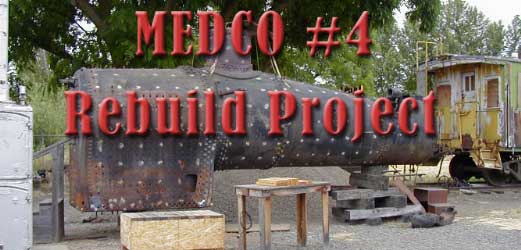
rare locomotive called a "Willamette" and they are currently restoring it
to it's original state as MEDCO #4. Built in 1925, it was in use between Butte
Falls and Medford, hauling logs until 1962 when a more economical means, trucks,
were put to the task. Plans are to rebuild the line on the original route
and have day excursions using the MEDCO#4.
click thumbnails for enlarged image
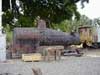 |
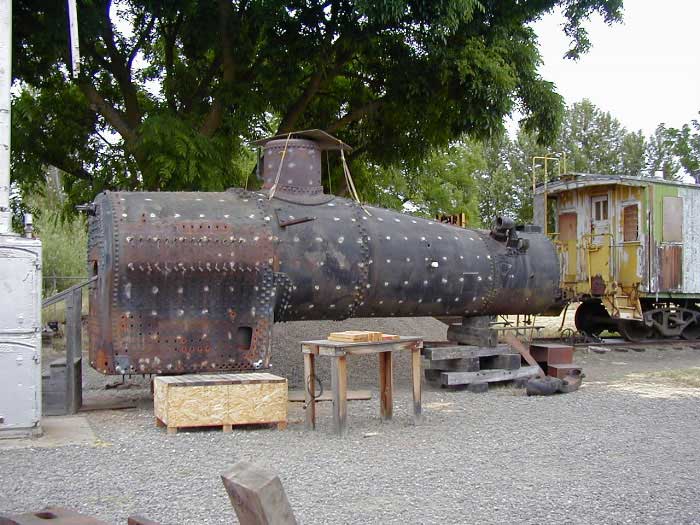
Here on the boiler, we can see white marks marking where the wall thickness was measured. It passed the ultrasound technology test by not having any thin spots.
The barrel of the boiler passed, but areas around the firebox, particularly at the mud ring had deteriorated below tolerances. Several sections of boiler plate have been cut away and are being replaced.
When the boiler work is finished, it will be in compliance with both state and Federal Railroad Administration regulations. |
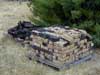 |
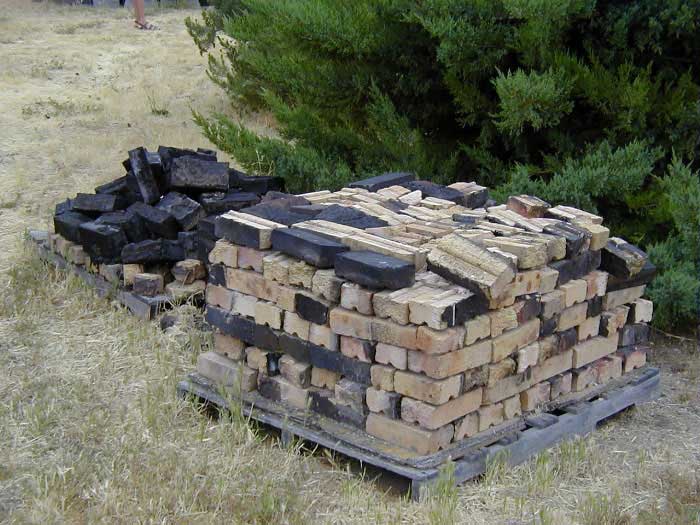
Here are the original bricks used to line the firebox. |
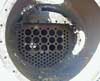 |
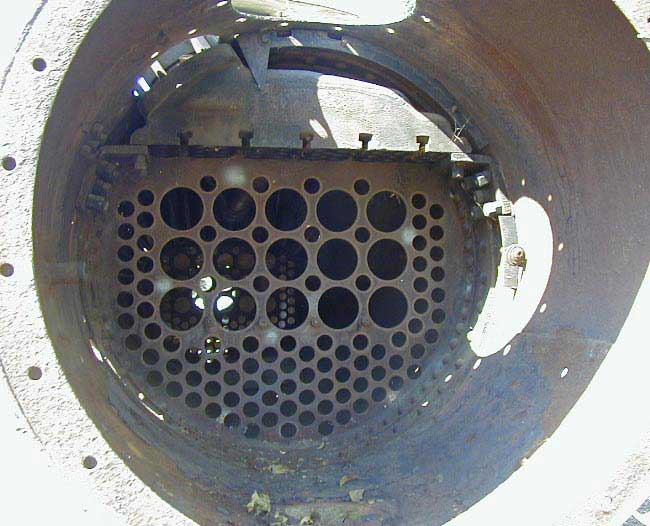
This is a view inside the boiler. Note the holes where the piping runs back and forth. |
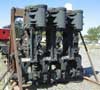 |
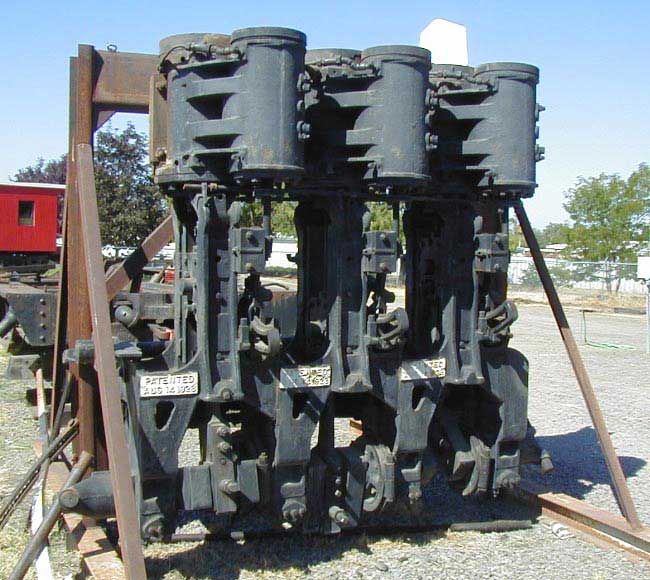
These are the main drive cylinders. Moving up and down, driving the drive shafts, then the turning drive shafts with gears turn the wheels giving it the power it needs for steep terrain. |
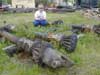 |
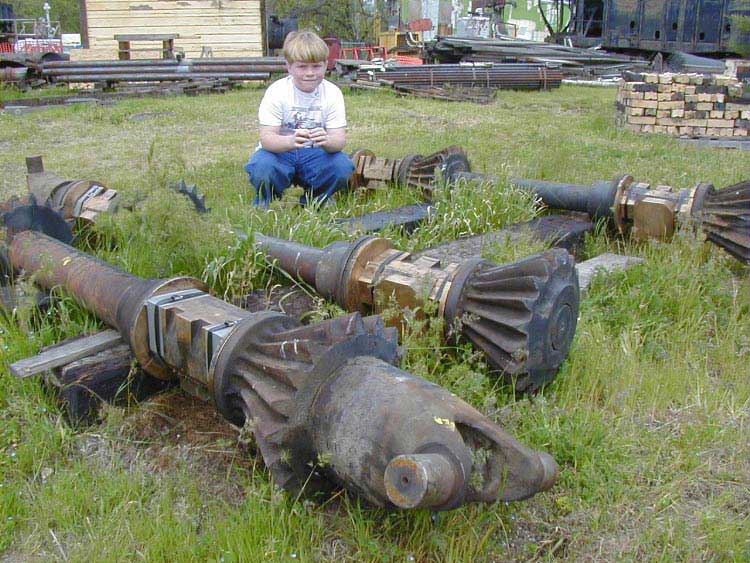
Chris is kneeling near the geared drive shafts. |
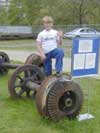 |
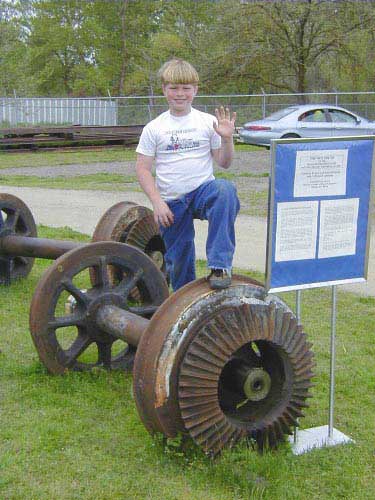
Chris is standing on the geared wheel sets.
These wheel sets are now in Mineral, WA being machined at the shops of the Mount Rainier Scenic Railroad.
On the left are the journal (bearing) boxes. |
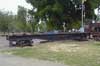 |
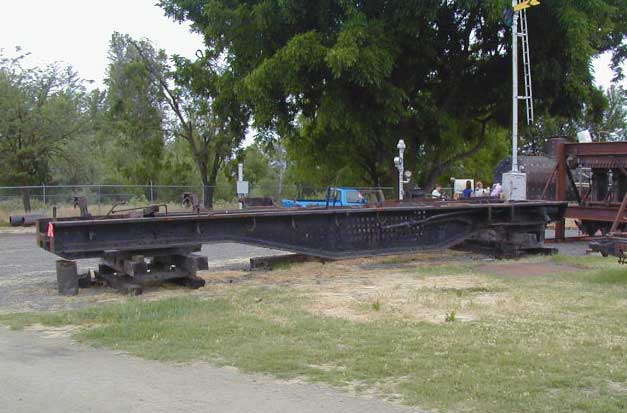
This is the main frame. It obviously was made of steel, but it's pilot beam was made of wood! |
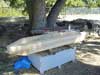 |
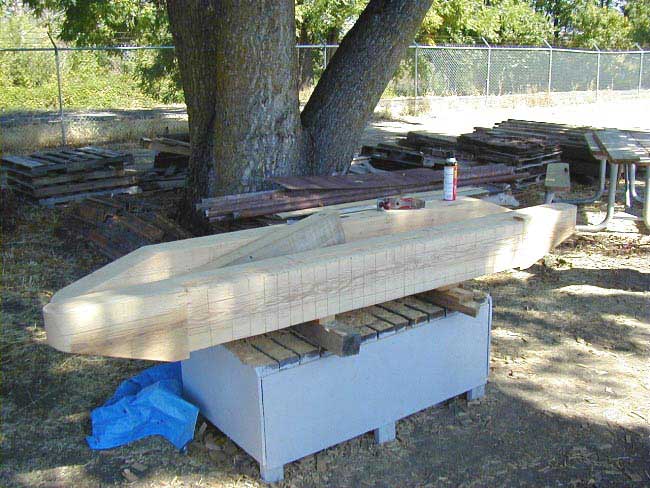
These wooden pilots being shaped with a hand plane are for the Society's CB&Q Caboose being restored nearby. The Medco #4 has simmilar wooden pilots, only without the tapered ends. |
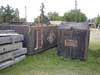 |
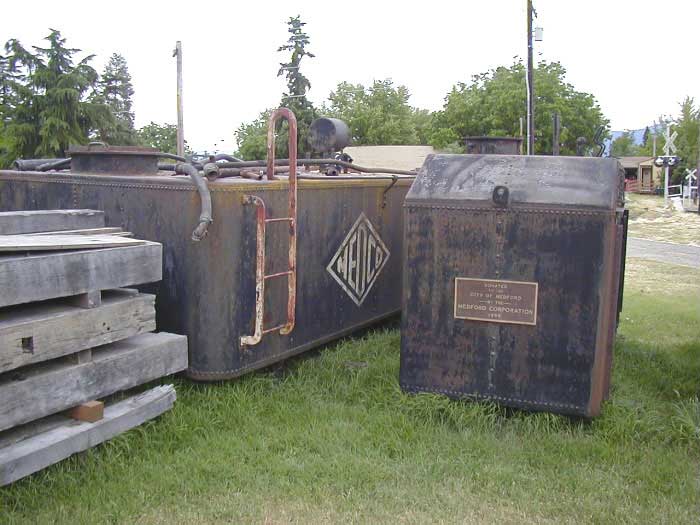
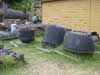
These are the tanks that hold the oil (right) and water (left). They will be remounted on the frame to the rear of the loco behind the cab. |
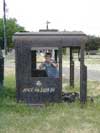 |
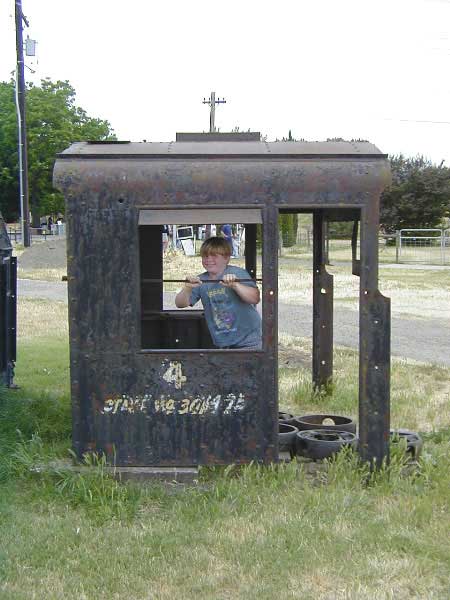
My son Chris is standing in the cab. |
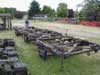 |
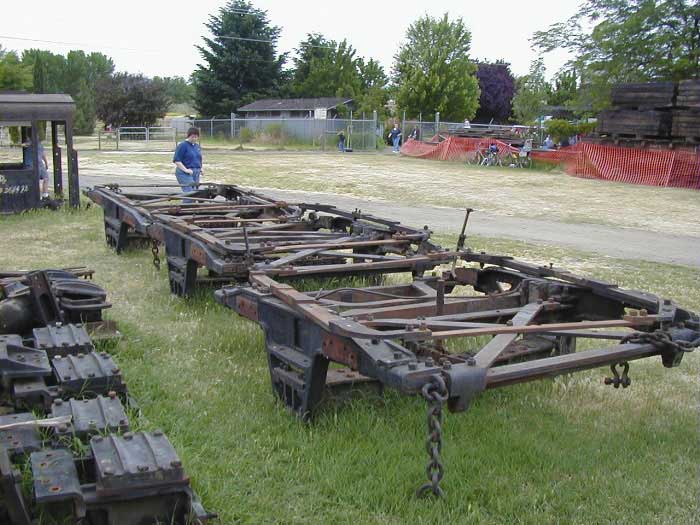
Here are the truck frames that hold the wheels. |
 |
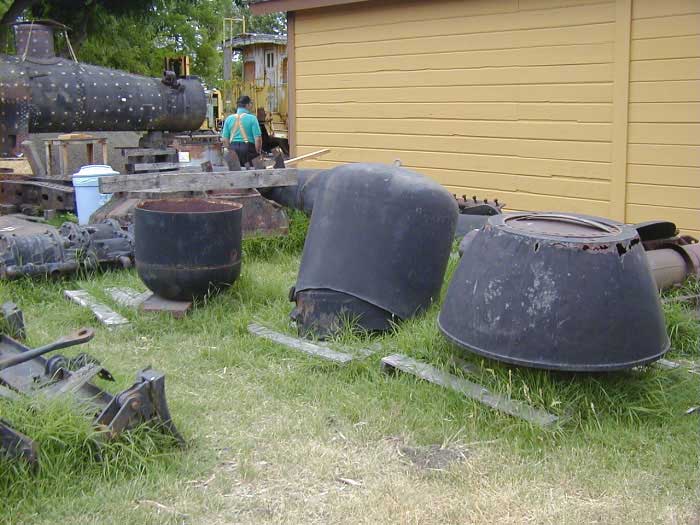
Here is the sanding dome and steam dome. |
Related
Links:
-
Special thanks to Larry Tuttle for
his technical help and advice.
-
Back to:
Railroad Park Index
[ Home ][ info ][ Prototype ][ Model ][ Park ][ History ][ Live Steam ][ Links ]

Train GIFs courtesy of
Dan's Depot
all photos © R.Wrede
this site owned and maintained by R.Wrede,
© all rights reserved.
|